Description
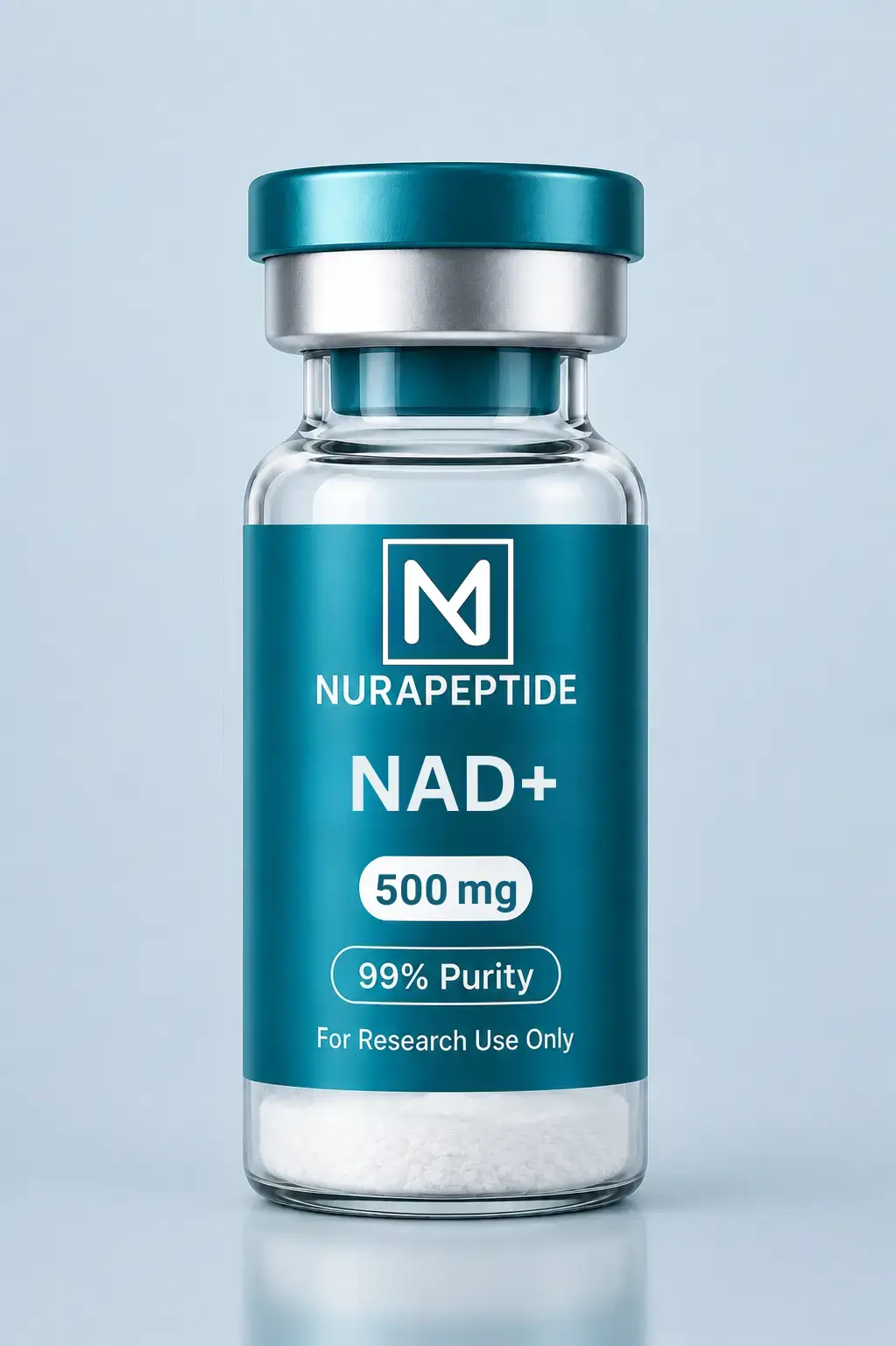
Nicotinamide adenine dinucleotide (NAD⁺) is an endogenous pyridine nucleotide and essential redox-active cofactor extensively studied in cellular bioenergetics, intermediary metabolism, and enzyme-mediated signaling pathways. NAD+ 500mg provides a defined quantity of NAD⁺ for controlled laboratory research involving its molecular characteristics and biochemical properties. At the molecular level, NAD⁺ participates in reversible oxidation-reduction reactions through interconversion with its reduced form, NADH, enabling electron transfer across numerous biochemical systems.
NAD+ 500mg in Biochemical Research
Researchers investigate NAD⁺ because it functions as an important electron carrier in cellular metabolic processes. The NAD⁺/NADH redox couple allows laboratories to examine oxidation-reduction reactions and electron-transfer mechanisms in controlled experimental systems. NAD+ 500mg can serve as a defined research material for laboratory studies involving NAD⁺ characterization, biochemical reactions, and related analytical investigations.
NAD⁺ also serves as a substrate for several enzyme families involved in cellular signaling and molecular regulation. These include NAD⁺-dependent enzymes such as sirtuins and poly(ADP-ribose) polymerases (PARPs). Laboratory research can examine how these enzymes interact with NAD⁺ and how changes in NAD⁺ availability relate to biochemical processes.
Research Applications
Controlled laboratory studies involving NAD+ 500mg may examine:
- NAD⁺/NADH redox chemistry
- Cellular bioenergetics
- Intermediary metabolic pathways
- Electron-transfer reactions
- Enzyme activity and substrate interactions
- NAD⁺-dependent biochemical reactions
- Cellular signaling mechanisms
- Mitochondrial and metabolic research
- Analytical characterization of NAD⁺
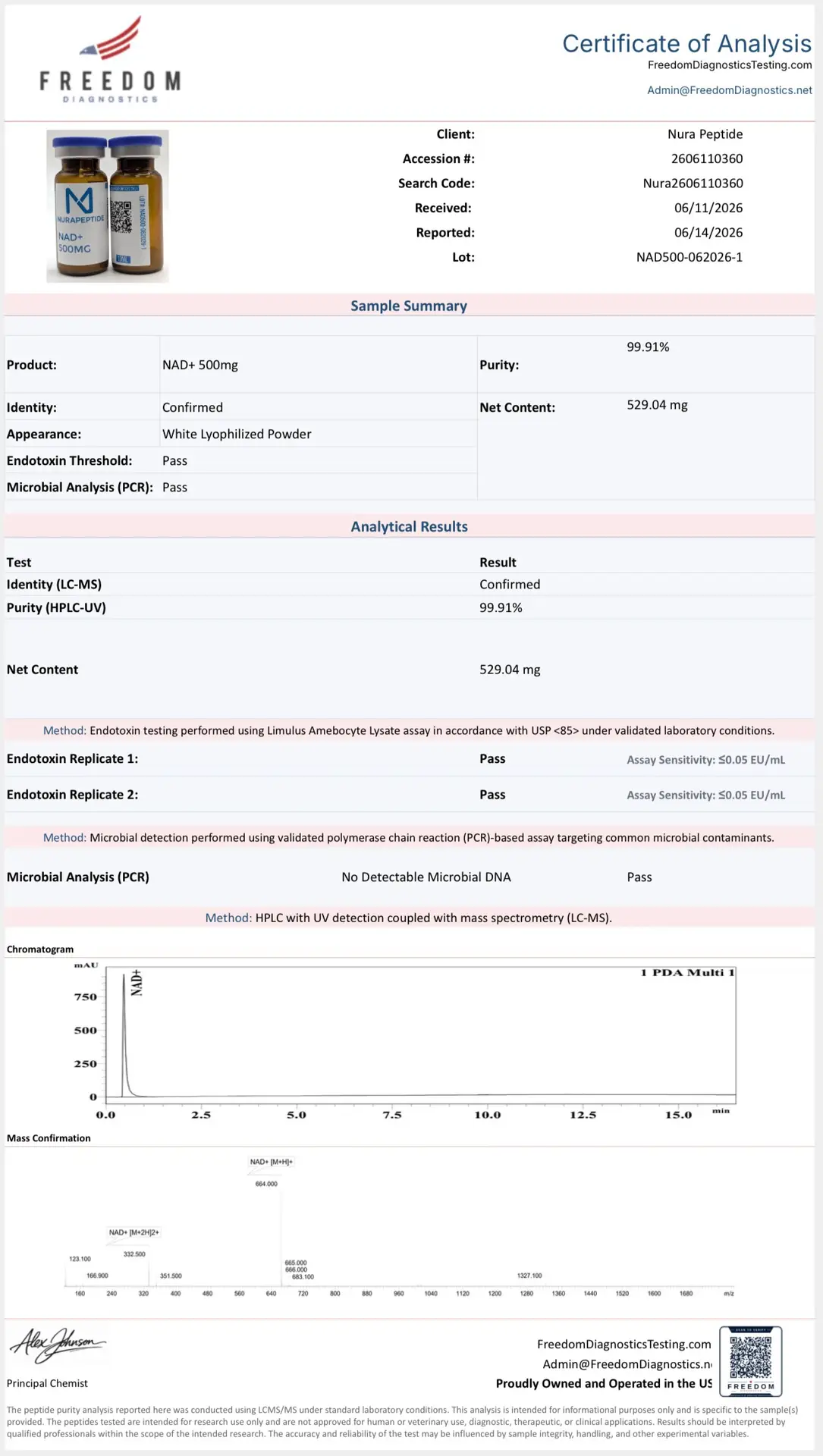
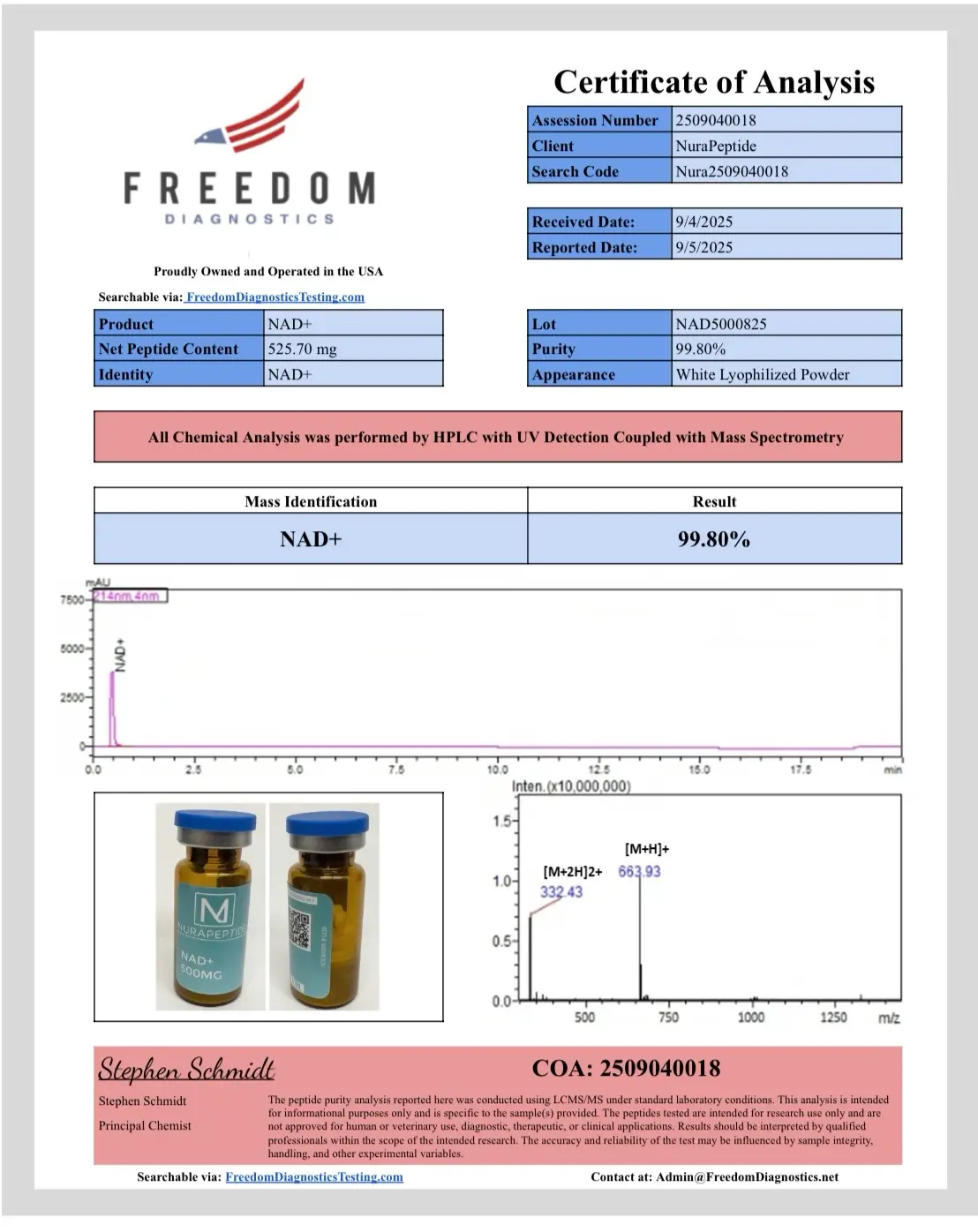
Researchers may use techniques such as chromatography, spectroscopy, mass spectrometry, and other validated analytical approaches to characterize NAD⁺ and related biochemical systems. Experimental methods should reflect the objectives, instrumentation, and protocols of the individual laboratory.
Research Use Only
FOR RESEARCH USE ONLY. NOT FOR HUMAN OR VETERINARY USE, NOT FOR CONSUMPTION OR SELF-ADMINISTRATION. NOT INTENDED TO DIAGNOSE, TREAT, CURE, OR PREVENT ANY DISEASE.
Researchers are responsible for determining the suitability of NAD⁺ for their specific experimental applications and complying with applicable laboratory safety procedures, institutional requirements, and regulations.





Reviews
There are no reviews yet.